
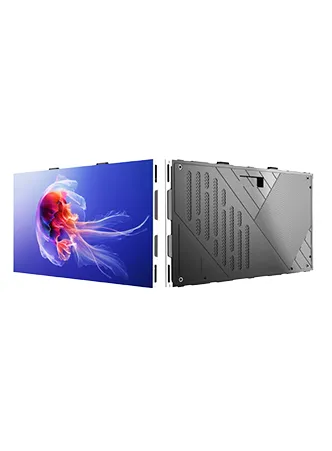
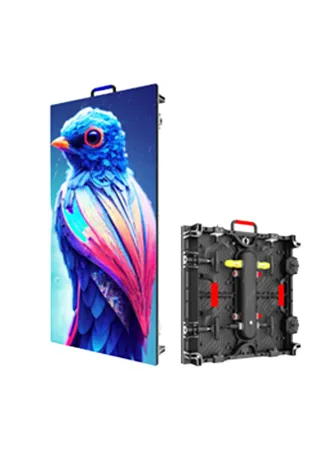
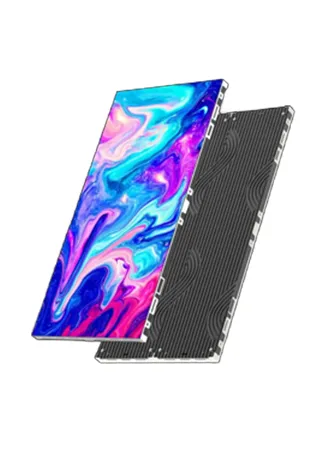

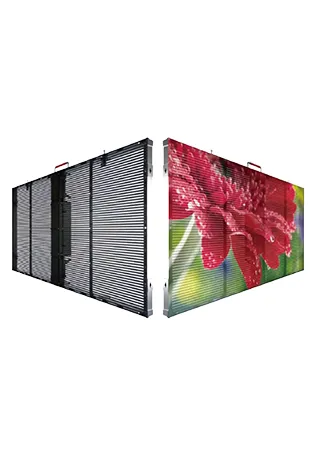





Soft Connection vs. Hard Connection: Which is Right for Your LED Display?
When it comes to building a high-quality LED display, the goal is always a flawless, seamless visual experience. This is because a uniform, stable screen ensures your content looks its best. And because both soft and hard connection methods are designed to link LED modules together, many installers and project managers wonder which is better.
With extensive experience in the LED display industry under my belt, I’ve seen firsthand how these two connection technologies impact a project’s final outcome, from installation speed to long-term durability.
So, in this article, I’ll help you settle the soft connection vs. hard connection debate once and for all, so you know exactly which to choose for your next LED display.
Ready to get started? Let’s dive in.
In This Article
Introduction to LED Display Connection Technologies
As we all know, every large-scale LED display is a modular system, composed of numerous smaller panels or modules that are joined together to create a single, seamless visual canvas. The connections between these modules serve two primary functions: providing a stable physical structure and transmitting power and data signals accurately across the entire screen.
Generally, there are two dominant approaches to achieving this: hard connections and soft connections, each with a distinct engineering philosophy.
What is Hard Connection of LED Screen?
First, let us discuss the hard connection.
Hard Connection technology, as the name implies, relies on rigid, fixed mechanical structures. Think of it as a precision-engineered system where modules are locked into place with metal components like positioning pins, screws, and firm clasps. This method prioritizes structural integrity, perfect alignment, and stability. Sometimes we call this connection as a wireless connection.

In a hard-wired display system, data and power lines are often integrated into a consolidated backplane or hub board, minimizing loose cables and creating a clean, robust setup.
Advantages and Disadvantages
Here’s a table outlining the pros and cons of hard connections for LED displays:
| Pros | Cons |
|---|---|
| High Stability | Limited Flexibility |
| Hard connections provide a robust and secure link between modules, minimizing movement and misalignment. | Not suitable for applications requiring frequent adjustments or relocations. |
| Durability | Higher Initial Cost |
| Less prone to damage, resulting in lower maintenance costs over time. | Generally more expensive upfront compared to soft connections. |
| Stable Signal Transmission | Additional Maintenance Cost |
| Ensures reliable data and power transmission with minimal interference. | Requires ongoing maintenance as LED modules can be less expensive, but the need for additional hub cards can increase overall costs. |
| Excellent Heat Dissipation | Increased Module Replacement Cost |
| Rigid structure helps manage heat effectively, prolonging LED lifespan. | Replacement of individual modules and Hub board may incur additional costs due to the need for specialized components. |
| Precision Alignment | |
| Achieves high levels of flatness and alignment, essential for high-quality displays. | |
| Easy Installation | |
| Plug-and-play design simplifies setup and allows for front service access. | |
| Lightweight | |
| Generally lighter weight allows for easier handling and installation. | |
| Aesthetic Appeal | |
| Clean design with no complex wiring connections enhances visual appeal. |
What is Soft Connection of LED Display?
Soft Connection technology takes the opposite approach, embracing flexibility. It utilizes power cables, flat data cables to link modules.
This method allows for a degree of movement and tolerance between modules, making it ideal for installations that are not perfectly flat or require a more forgiving assembly process.
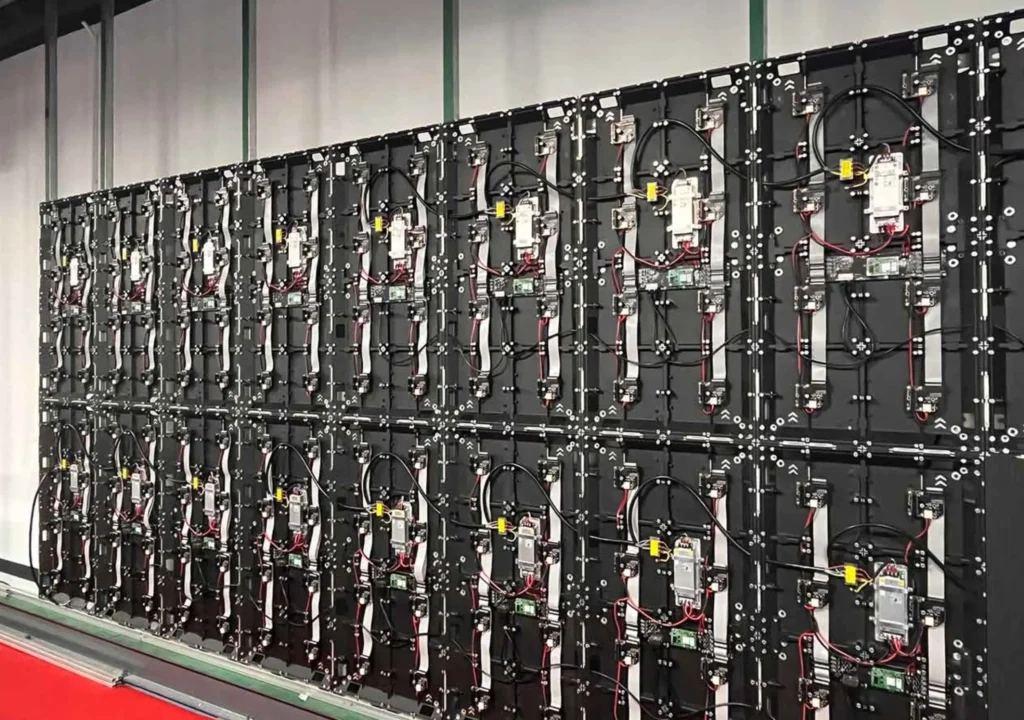
The soft connection of the LED screen is also called a wired connection.
Advantages and Disadvantages
| Pros | Cons |
|---|---|
| Flexibility | Potential Signal Interference |
| Ideal for irregular or curved surfaces, allowing for creative designs. | May be more susceptible to signal interference, affecting performance. |
| Cost-Effective | Durability Concerns |
| Typically lower initial cost compared to hard connections. | More prone to damage over time, potentially increasing maintenance needs. |
| Lightweight Design | Complex Installation |
| Lighter weight can simplify handling and installation. | Installation may involve complicated cable connections between modules and receiver cards. |
| Modular Upgrades | Aesthetic Issues |
| Easier to replace or upgrade individual modules without major disruption. | Can appear messy with tangled wires, leading to a less tidy look. |
Making the Right Choice: Soft Connection or Hard Connection?
Now, we have understood all the pros and cons. You might wonder: Soft Connection or Hard Connection? Which should I choose?
Generally, choosing between a hard and soft connection requires a careful evaluation of the project’s specific needs, balancing factors like visual quality, installation environment, usage duration, and budget.
When deciding between soft and hard connections for LED displays, consider the following factors:
Installation Complexity
- HardConnections: Generally easier to install, requiring fewer tools and less technical expertise. Ideal for quick setups.
- Soft Connections: A more complex installation process that may require specialized tools and skills. This can lead to longer setup times.
Application Scenarios:
- Soft Connections: Best suited for irregular or curved surfaces where flexibility is essential. They allow for creative designs and easier adjustments.
- Hard Connections: More appropriate for stable environments, control roomss, conference room where high durability and stability are critical, such as permanent installations in commercial settings.
Visual Quality:
- Soft Connections: May offer less precision in alignment, potentially affecting the overall visual quality. However, they can adapt to various design needs.
- Hard Connections: Provide superior flatness and alignment, resulting in higher visual quality, especially for high-resolution displays.
Budget:
- Soft Connections: Typically lower initial costs, making them a cost-effective choice for budget-conscious projects.
- Hard Connections: Higher upfront costs, but may lead to lower maintenance expenses over time due to their durability and stability.
Conclusion
In this post, we explored the basic concepts and key considerations for choosing between soft and hard connections for LED displays.
If you’re unsure which option is best for your project, we encourage you to evaluate your specific requirements and priorities. For further assistance or to discuss your project in detail, please feel free to contact us. We’re here to help you make the right choice for your LED display needs!