




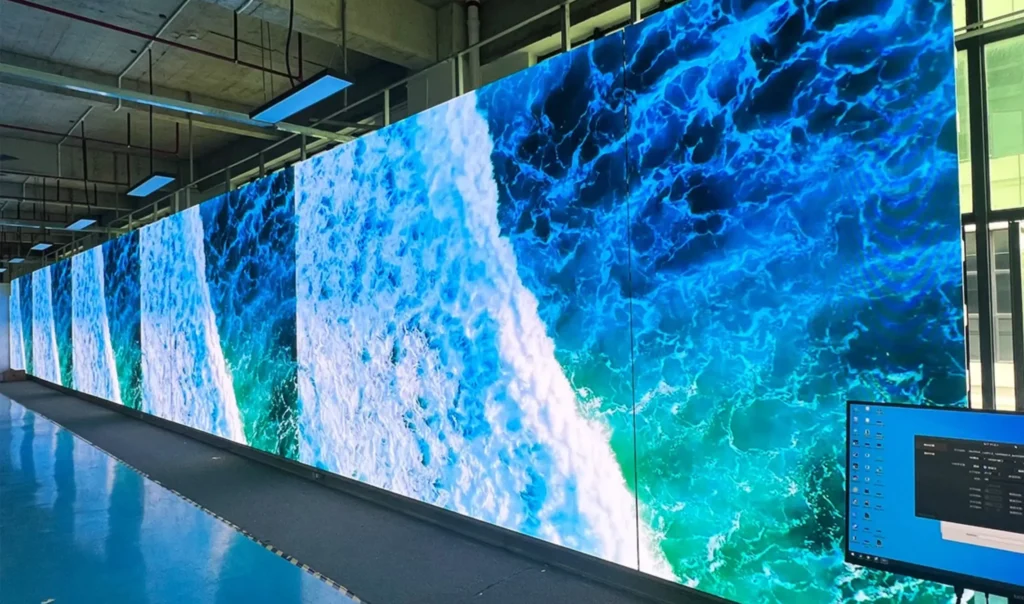
What is a high resolution LED Display (and do you need one)?
High resolution LED displays have become a game-changer in the world of digital screens. These cutting-edge displays are known for their superior image quality, vibrant colors, and exceptional clarity, making them a popular choice across industries. Whether it’s for advertising, entertainment, or delivering crucial information, high resolution LED displays offer unmatched performance and flexibility. But what exactly are they, and why are they so popular?
So what exactly is a high resolution LED display? Why do you need one, and how can it revolutionize the way you present content, run events, or upgrade your workspace?
In this post, I’ll explain everything you need to know about high resolution LED displays. We’ll explore what makes them unique, why they’re gaining popularity, their technical requirements, and how to choose the right one for your needs. Additionally, we’ll delve into their advantages, disadvantages, pricing, and various applications to help you make an informed decision.
Feel free to use the quick links below to jump straight to different sections:
In This Article
- What is a High Resolution LED Display?
- Why Are High Resolution LED Screens So Popular?
- Key Technical Requirements
- What Makes an LED Display “High Resolution”?
- Resolution Standards for High Resolution LED Displays
- High Resolution vs. Low Resolution Displays
- Different LED Technologies for High Resolution LED Displays
- Common Pixel Pitch of High Resolution LED Screen
- Pricing of High Resolution LED Displays
What is a High Resolution LED Display?
A high resolution LED display is an advanced form of digital screen technology that uses light-emitting diodes (LEDs) to create images, videos, and text with exceptional clarity and detail. High resolution, in this context, refers to the density of pixels (tiny light-emitting dots) on the screen, which determines the sharpness and clarity of the images displayed.
Unlike traditional display technologies, LED displays offer remarkable brightness, vibrant colors, and the ability to scale to virtually any size, making them ideal for both indoor and outdoor applications.
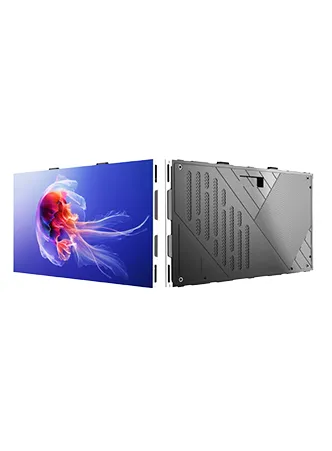
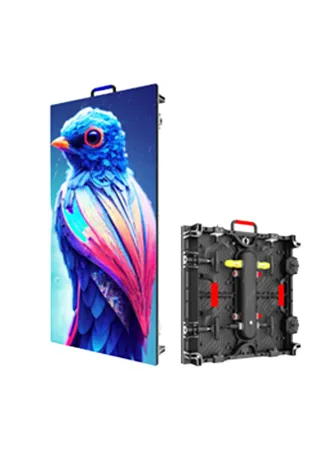
These displays are modular, meaning they are assembled from smaller panels or cabinets that can be configured into various sizes and shapes. This flexibility allows for creative installations, including curved, seamless, or even irregular-shaped screens.
Why Are High Resolution LED Screens So Popular?
The growing popularity of high resolution LED screens can be attributed to advancements in technology, evolving industry needs, and their ability to deliver unparalleled visual experiences.
Following are the main reasons:
High Image Quality
High resolution LED screens offer exceptional image quality with vibrant colors, deep blacks, and wide viewing angles. The high pixel density ensures that even the smallest details are rendered clearly, making them perfect for applications where close-up viewing is common, such as retail stores, control rooms, or broadcast studios.
Simple Installation and Maintenance
Most high resolution LED screens are designed for easy installation and maintenance. Many models feature front-access serviceability, allowing technicians to replace individual modules without dismantling the entire screen.
Compared with traditional LED screens, this simplifies repairs, reduces downtime, and ensures seamless operation in high-traffic environments.
High Refresh Rate for Smooth Motion
Another reason is that the high resolution LED screens come with high refresh rates, typically above 1920Hz. Some is above 3840Hz or 7680Hz.
This eliminates flickering and ensures smooth motion, making them ideal for video playback, live broadcasts, and event presentations. The high refresh rate also enhances the viewer experience by providing stable and flicker-free visuals.
Energy Efficiency and Durability
Energy-saving technology is another reason for their popularity. Despite their high brightness levels, high resolution LED screens consume less power than older systems like LCD or plasma displays.
Typical technologies include common cathode energy-saving technology. With this technology, energy saving can be up to 30% power consumption.
Additionally, they are durable and can withstand prolonged use without performance degradation.
Lighweight Design
High resolution LED displays are lightweight. Their lightweight construction makes them easier to transport and install, especially in venues with weight restrictions.
Golden Ratio Design
The LED displays are also designed with the golden ratio in mind, optimizing cabinet proportions for better aesthetics and space utilization.
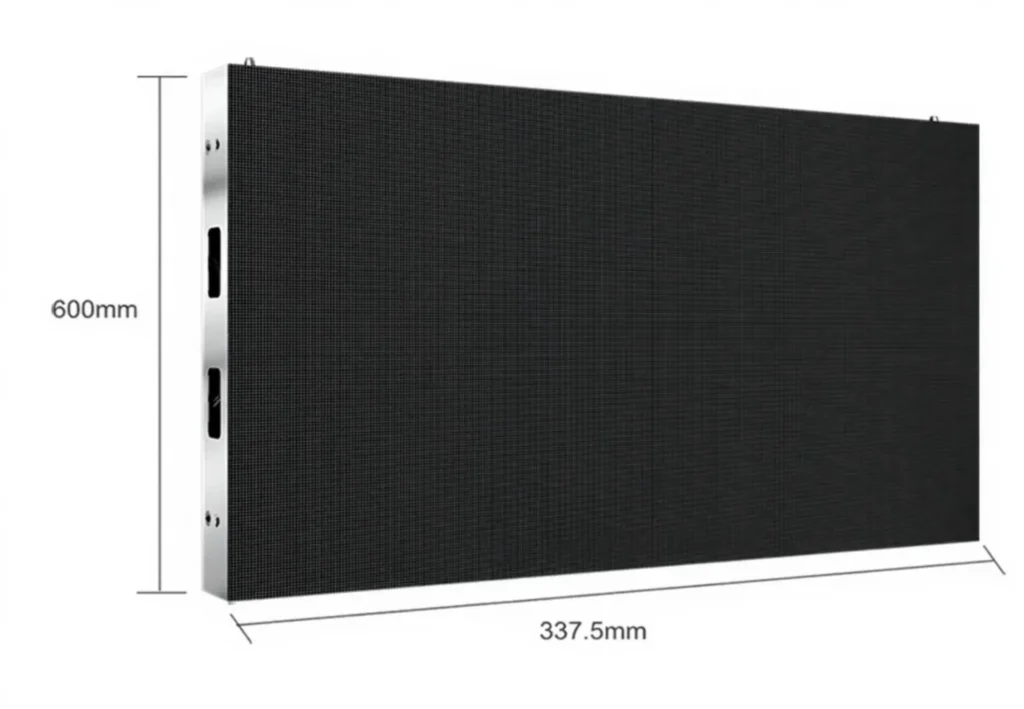
The common cabinet features a 16:9 or 4:3 design. They can easily achieve 4K, 8K, and UHD LED screens. These cabient includes 640*480mm, 600*337.5mm, 320*480mm
Key Technical Requirements
When selecting a high resolution LED display, understanding the technical requirements is crucial to ensure optimal performance and longevity.
Here are some main factors:
Pixel Pitch and Density
Pixel pitch is the distance between the centers of two adjacent pixels and is measured in millimeters (mm). We usually use the letter P plus a number, such as P1.2, P2, P2, P5, etc.
The smaller the pixel pitch, the higher the pixel density, resulting in sharper visuals.
Here is the common pixel pitch and its pixel density.
| Pixel Pitch | LED Resolution |
| P1.25 | 640,000 dots/sqm |
| P1.538 | 422,500 dots/sqm |
| P1.667 | 360,000 dots/sqm |
| P1.86 | 289,444 dots/sqm |
| P2 | 250,000 dots/sqm |
| P2.5 | 160,000 dots/sqm |
| P3.076 | 105,625 dots/sqm |
| P4 | 62,500 dots/sqm |
| P5 | 40,000 dots/sqm |
| P3 | 111,111 dots/sqm |
| P1.953 | 262,144 dots/sqm |
| P2.604 | 147,456 dots/sqm |
| P2.976 | 112,896 dots/sqm |
| P3.91 | 65,536 dots/sqm |
| P4.81 | 43,264 dots/sqm |
| P6 | 27,556 dots/sqm |
| P6.67 | 22,500 dots/sqm |
| P8 | 15,625 dots/sqm |
| P10 | 10,000 dots/sqm |
| P16 | 3,906 dots/sqm |
| P3.33 | 90,000 dots/sqm |
| P5.925 | 28,561 dots/sqm |
Brightness and Contrast
Brightness, measured in nits, determines the screen’s visibility in various lighting conditions.
High resolution LED displays typically offer brightness levels ranging from 800 nits for indoor use to over 5000 nits for outdoor applications.
Contrast ratio, which measures the difference between the darkest and brightest parts of an image, is equally important. A higher contrast ratio ensures vivid and clear visuals.
Refresh Rate
The refresh rate, measured in hertz (Hz), refers to how many times the screen refreshes its image per second.
High resolution LED displays often have refresh rates of 1920Hz or higher, ensuring smooth video playback and eliminating flicker, which is especially important for live broadcasts or when the screen is filmed.
Here are the main refresh rates that affect high resolution LED displays:
- 1920 Hz: Commonly used for standard applications, providing smooth motion for most video content.
- 3840 Hz: Offers enhanced performance, ideal for professional broadcasting and high-speed motion content, reducing flicker significantly.
- 7680 Hz: Designed for ultra-high-end applications, particularly in live events and broadcasting, ensuring flawless motion clarity and minimal latency.
What Makes an LED Display “High Resolution”?
The designation of “high resolution” in LED displays is determined by several factors, with pixel pitch being the most critical.
Generally, there are two factors: Pixel pitch and Pixel Density.
Pixel pitch
A display is considered high resolution when it can present sharp, detailed images even at close viewing distances.
For example, a 1.2mm pixel pitch screen will have significantly higher pixel density than a 4mm screen of the same size, allowing it to display finer details.
Pixel Density
Another crucial factor is the total pixel count, which is calculated as the product of the number of horizontal and vertical pixels (e.g., 1920 x 1080 for Full HD, 3840 x 2160 for 4K).
High-resolution displays aim to match or exceed these standards.
In summary, an LED display is considered high resolution when it combines a small pixel pitch and high pixel density to deliver sharp, detailed, and vibrant visuals suitable for demanding applications.
Resolution Standards for High Resolution LED Displays
Now, you might be wondering: What is the resolution of a high-resolution LED display?
When it comes to high resolution standard, we have to mention the term 2K, 4K, and 8K, which you may know from other LCD screens.
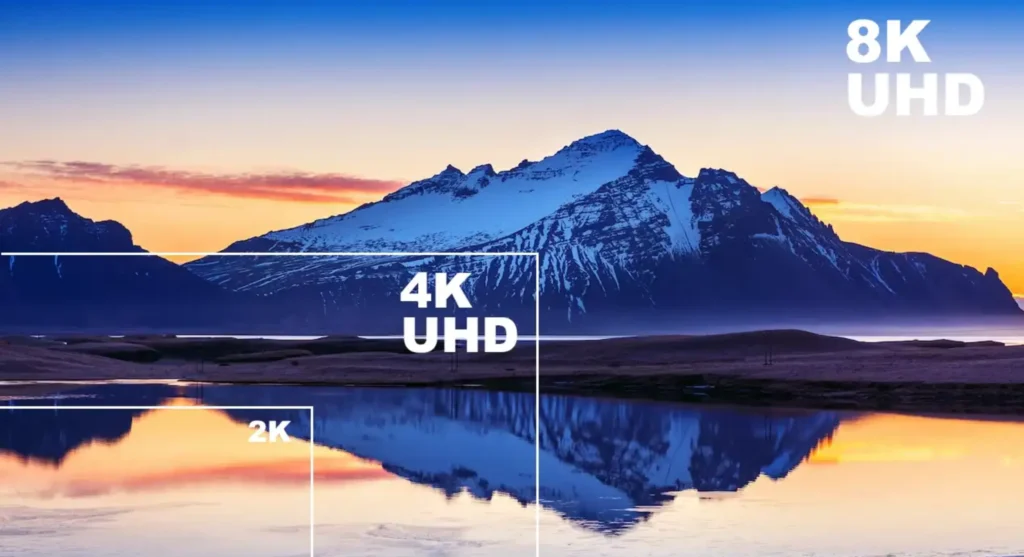
Generally, when an LED display meets the standards of 2K, 4K, and 8K, it is considered a high-resolution LED screen.
Here’s a table summarizing the resolutions for 2K, 4K, and 8K:
| Resolution | Pixel Dimensions | Total Pixels | Common Uses |
| 2K | 2048 x 1080 | ~2.2 million pixels | Digital cinema, church, shopping center, etc |
| 4K | 3840 x 2160 | ~8.3 million pixels | TV Studios, Conference room, stage, museum, exhibition, etc |
| 8K | 7680 x 4320 | ~33.2 million pixels | High-end displays, education, professional media, control room, etc |
Custom Resolutions
Because LED displays are modular, they can be constructed in virtually any size or aspect ratio, resulting in custom resolutions that may not conform to traditional display standards.
For example, a long, thin ticker display may have a resolution of 3840 x 200, while a square video wall might be 2048 x 2048.
Generally speaking, if the pixel density exceeds the 2K standard, the LED display also belongs to the high-resolution LED display.
High Resolution vs. Low Resolution Displays
High resolution and low resolution displays differ significantly in various aspects including pixel density, price, viewing distance, and overall image quality.
Here is a summary table for your reference.
| Aspect | High Resolution Displays | Low Resolution Displays |
| Pixel Density | Higher (e.g., 4K: 3840 x 2160) | Lower (e.g., 1080p: 1920 x 1080) |
| Price | More expensive | More affordable |
| Viewing Distance | Closer viewing without pixelation | Further viewing needed to avoid pixelation |
| Image Quality | Superior detail and color accuracy | Basic clarity, less detail |
| Common Uses | Professional, broadcasting, high-end displays | General use, budget applications |
Different LED Technologies for High Resolution LED Displays
The evolution of LED technology has led to several different packaging and assembly methods, each with its own strengths and applications.
The three most prominent technologies for high resolution LED displays are SMD (Surface Mount Device), GOB (Glue on Board), and COB (Chip on Board).
SMD (Surface Mount Device)
SMD technology involves mounting tiny LED chips directly onto the surface of circuit boards. Each SMD package contains red, green, and blue diodes, allowing for full-color mixing in a compact footprint.
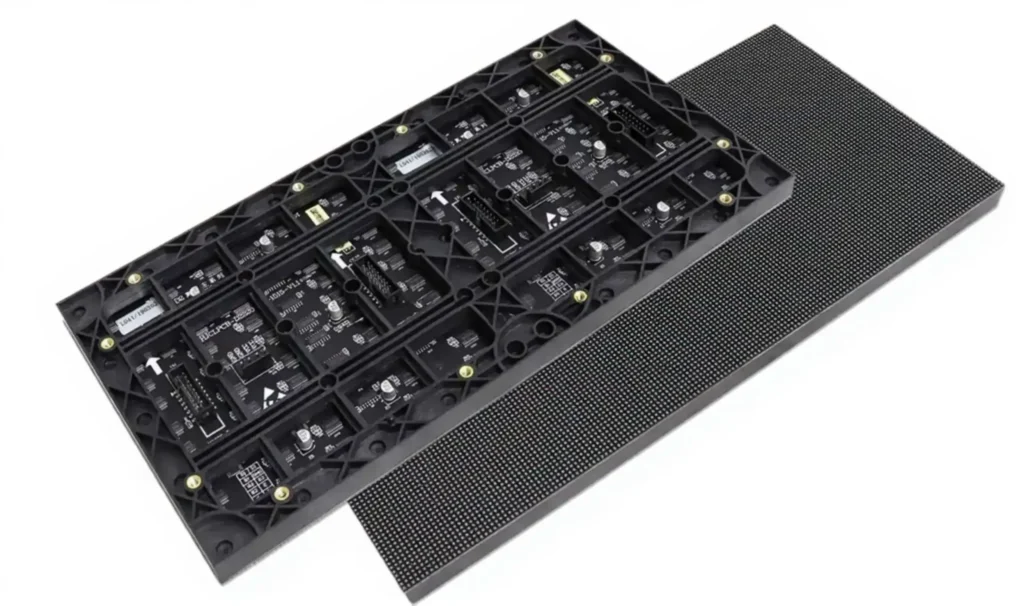
SMD has been the standard for high resolution LED displays due to its ability to achieve small pixel pitches and high brightness levels. SMD modules are relatively easy to produce and repair, making them a popular choice for both indoor and outdoor high-resolution video walls.
GOB (Glue on Board)
GOB technology builds upon SMD by applying a protective layer of transparent epoxy or silicone over the LEDs.
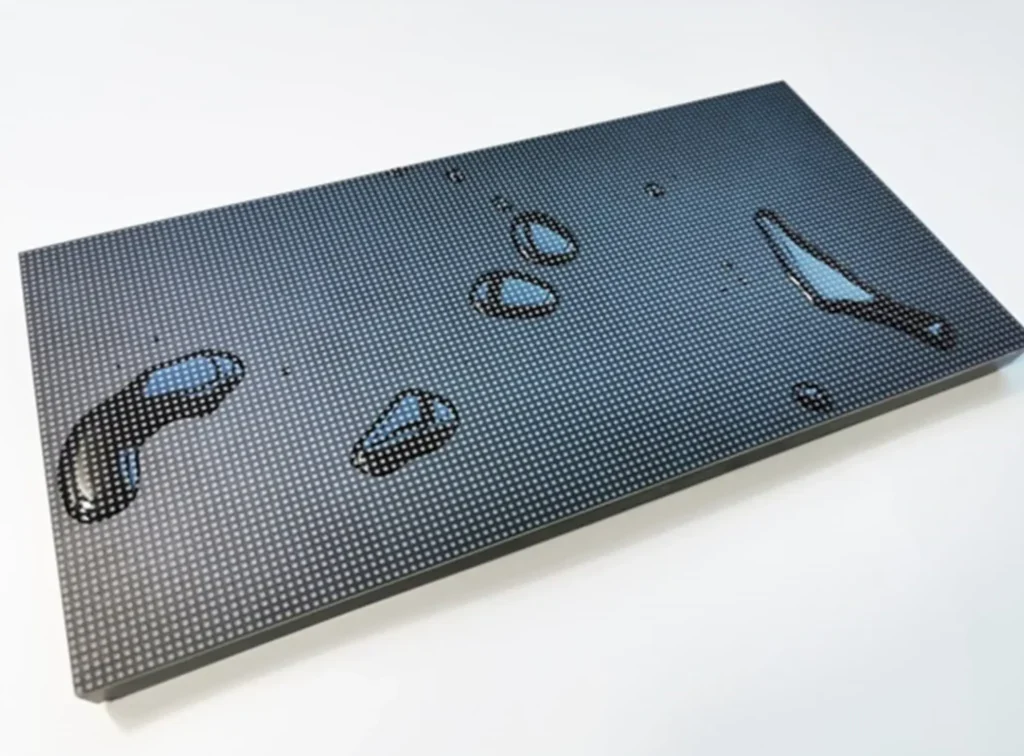
This layer shields the delicate diodes from dust, moisture, and physical impact, significantly enhancing durability and reliability.
GOB displays are ideal for environments where the screen may be touched, bumped, or exposed to harsh conditions, such as retail stores or public spaces.
COB (Chip on Board)
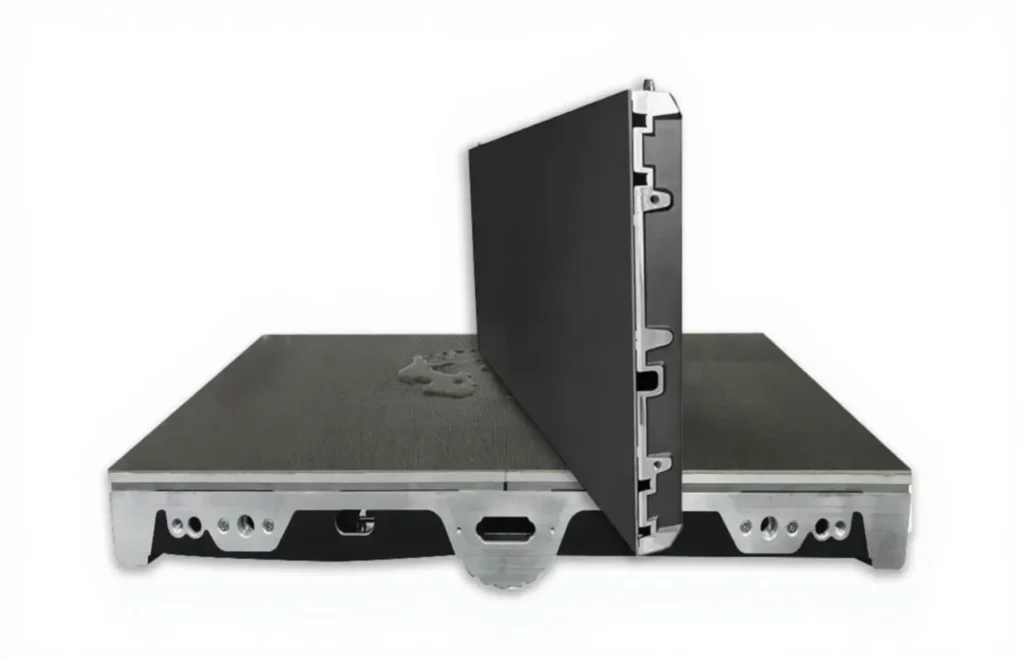
COB takes integration a step further by mounting LED chips directly onto the circuit board without individual packaging. This allows for even tighter pixel pitches, higher reliability, and improved thermal management.
COB displays are particularly well-suited for ultra-high resolution applications where pixel pitch is less than 1mm. The seamless surface also reduces glare and improves viewing angles, making COB an exciting option for the next generation of high resolution LED displays.
| Feature | SMD | GOB | COB |
| LED Mounting | Mounted on PCB surface | SMD with glue coating | Chips bonded directly to PCB |
| Protection | Minimal (exposed) | Glue layer (waterproof, dustproof, anti-collision) | Resin layer (very robust) |
| Maintenance | Easier chip-level repair | Slightly harder due to glue | Hardest (chip-level repair difficult) |
| Display Quality | High, accurate blending | Same as SMD | Higher integration, less glare |
| Durability | Lower | Good | Best (shock, dust, moisture resistant) |
| Cost | Standard | Slightly higher | Often higher |
| Applications | Indoor, outdoor, rental, advertising, general-purpose | Indoor, outdoor, Rental, public,high-traffic areas advertising, etc | High-end, fine-pitch, etc |
Common Pixel Pitch of High Resolution LED Screen
Here is the common pixel pitch used for a high-resolution LED screen:
| Pixel Pitch Category | Pixel Pitch (mm) | Characteristics |
| Ultra Small Pixel Pitch | P0.6 – P1.2, P0.7, P0.9, etc | High pixel density, ideal for close viewing, sharp images |
| Small Pixel Pitch | P1.2 – P1.5, P1.5, P1.6, P1.8, etc | Extremely fine detail, suitable for high-end applications |
| Mid Pixel Pitch | P2 – P2.5 | Balanced clarity and cost, suitable for various environments |
Pricing of High Resolution LED Displays
The pricing of high resolution LED displays is influenced by several factors, including resolution, technology, and features.
Generally, high resolution displays, such as 2K, 4K and 8K, come at a premium compared to lower resolution options like 1K due to the increased number of pixels and advanced technologies required for production.
Why the Price Difference?
- Pixel Density: Higher resolutions require more LEDs and sophisticated processing capabilities, driving up manufacturing costs.
- Technology: Advanced features such as high refresh rates, better color reproduction, and enhanced durability contribute to higher prices.
- Produce Process: High-resolution LED screen needs more complex production steps.
Comparison: 4K vs. 2K
- 4K Resolution (3840 x 2160): Typically priced between $1,500 to $3,000 per square meter due to its high pixel density, which provides exceptional detail and clarity.
- 2K Resolution (2048 x 1080 or 1920 x 1080): Generally more affordable, ranging from $400 to $1,000 per square meter, making it a cost-effective option for applications where ultra-high resolution is not critical.
For more information about 4K LED screens, check this.
| Metric | 2K LED | 4K LED | 8K LED |
| Physical Resolution | 1920×1080 | 3840×2160 | 7680×4320 |
| Total Pixels | 2.07 million | 8.3 million | 33.18 million |
| Price | Low | Medium | High |